MVCC History Class Gets In-Depth Look At Fort Stanwix Siege
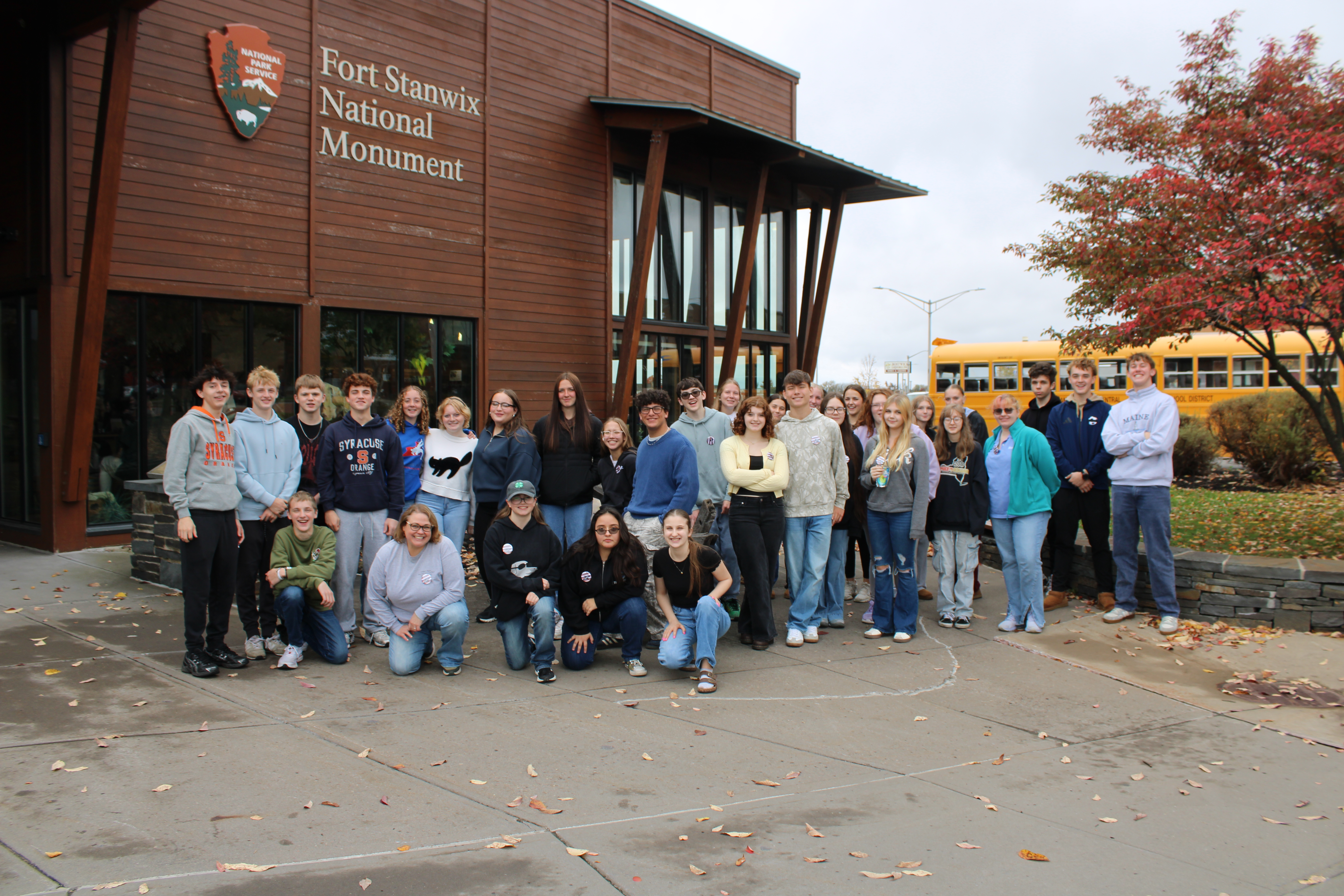
What was it like to overcome a 21 day siege that influenced the course of American History? On Wednesday, October 14th, students from Mrs. Harney’s MVCC Dual Credit US History course learned some answers to that question with a trip to the Fort Stanwix National Monument.
Known as “The Fort That Never Surrendered”, Fort Stanwix, also known to many at the time as Fort Schuyler, was located in a vital strategic location for British Forces during the Saratoga Campaign, which was a coordinated effort to effectively split the colonies in half at the Hudson River. While originally built by the British as part of efforts in the French and Indian War, the colonists rehabilitated the structure to protect the Oneida Carry, a critical six mile portage between the Mohawk River and Wood Creek that served as the primary trade, travel, and strategic military link across the Appalachian mountain barrier. It was extremely important for controlling inland commerce and military movements between Canada, the Great Lakes, and the Eastern Seaboard. British forces led by Barry St. Leger attempted to capture this location in August 1777, but the Colonial troops stood firm over a three-week siege.
During the siege, a large portion of the British forces withdrew to ambush Colonial relief troops led by Nicholas Herkimer at Oriskany. While St. Leger’s forces were successful in that ambush, the re-routing of personnel left the British encampments exposed to looting by the colonists. That loss of resources, a fracture in trust with Britain's indigenous allies because of massive casualties at Oriskany, and a brilliant plan of deception by Continental Army general Benedict Arnold to convince the British that inflated numbers of relief troops were en route, combined to convince the British to abandon their siege and flee westward.
That was key for the American forces. Because St. Leger was forced to flee west, his troops didn’t reach the Hudson Valley in time to be of any help at the Battle of Saratoga. In addition, a British defeat at Bennington and a move toward Philadelphia by General William Howe allowed American forces to commit to surrounding Burgoyne at Saratoga. His eventual surrender at the hands of General Horatio Gates turned the tide of war towards independence for the colonists.
In the present day, Camden High School students envisioned what that experience was like through the Monument’s “Survive the Siege” program. The program was actually designed by Harney through her participation in the National Park Service’s “Teacher Ranger Teacher” program in the Summer of 2022. Unlike other visits to Fort Stanwix, the “Survive the Siege” program is special because it aligns with the US History curriculum and incorporates rigorous historical thinking skills in a place-based learning setting. This is Camden’s second group to complete the program.
The trip was a fully-funded experience thanks to Mrs. Harney’s participation in a summer workshop at Madison-Oneida BOCES entitled “Prepare Students to Tell Our Region's American Revolution Story”. The workshop featured immersive learning experiences at the Fort, at the Oriskany Battlefield Site, and with the Oneida Indian Nation, which holds a distinction as the first indigenous ally of the Continental Army. By participating in that experience, Harney earned funding through the “America 250 Madison County” grant to take her students.
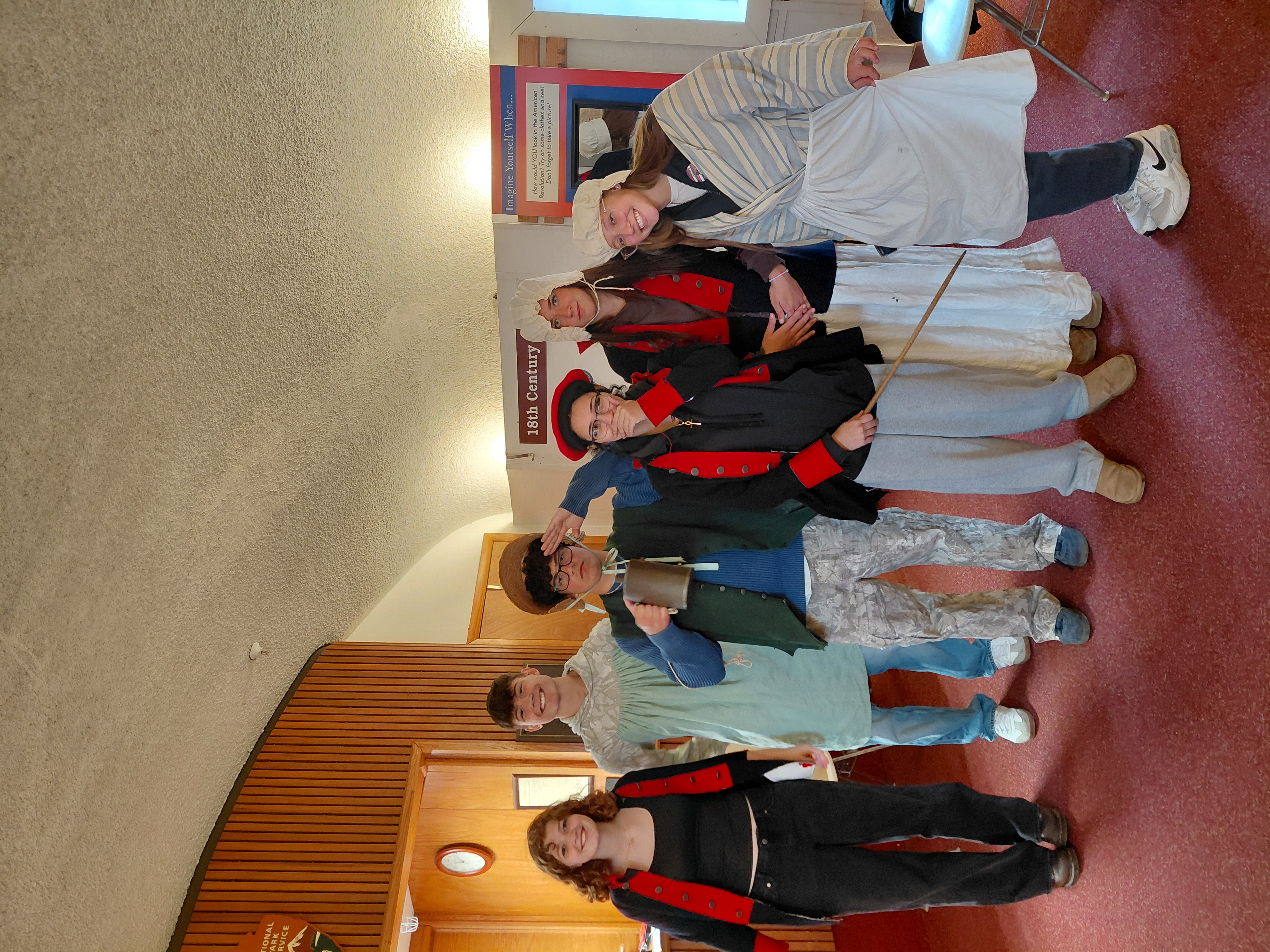
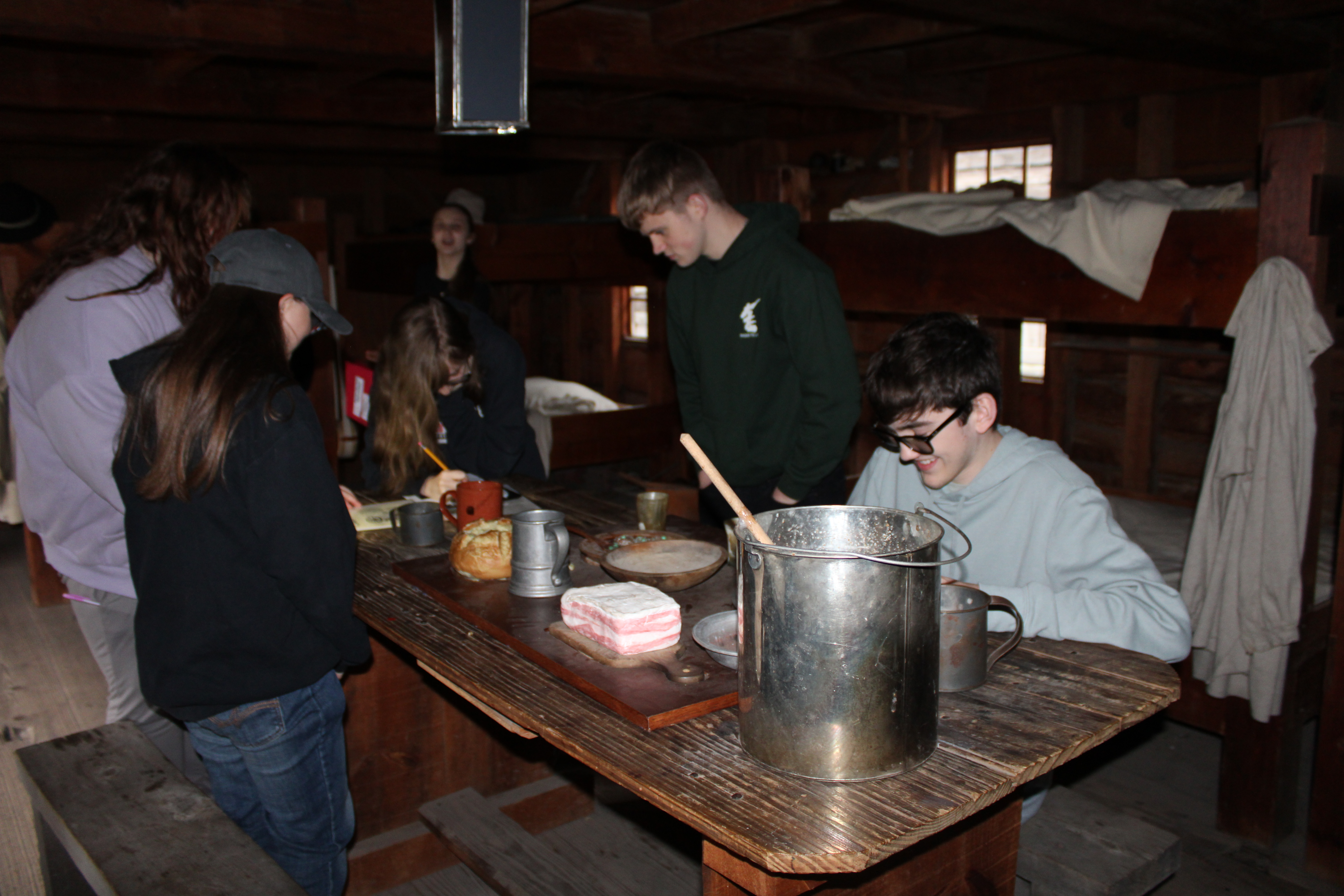
Students were greeted by NPS Ranger Kelly who promptly put students into marching formation to the first stop on the tour. She described the geographical context for the Fort and its strategically important location. Ranger Kelly explained the learning goals for the day and put students right to work. Working in teams, students completed game-based activities and tasks to discover how the American defenders of the fort secured a victory against the British, and why their survival was crucial to the outcome of the Saratoga Campaign.
Students worked in teams with effective communication, patience, and problem solving to complete 12 tasks. The first team to complete the Survive the Siege tasks, complete a puzzle, and use a code on the Cipher wheel won a prize. To raise the stakes and build camaraderie, Mrs. Harney added an extra incentive; each student on the winning team received a gift certificate for a lemonade from the CHS Camden Corner Store.
The winning team, made up of Isaiah Franco, Troy Cox, Laura Albrecht, Kayleigh Harrington, Nevaeh Sharpe, Nico Noreault, and Peyton Loomis, was the first to also experience the simulated Cannon Firing demonstration with the help of a National Park Service interpreter. All students had the opportunity to participate.
Students wrapped up the day with a 17 minute film at the visitor center which highlighted life for soldiers after the August 1777 siege over the winter of 1777-1778. The realities of the lack of food and supplies, time away from families, loneliness and boredom, and lack of “military action” all contributed to some soldiers deserting. The deserters were caught and met with a fatal punishment for their actions.
To remember their immersive experience, each student took home a button that said “I Survived the Siege of Fort Schuyler!"